Cover-Ups: What Can Be Hidden and What Can't
Covering a tattoo is not painting over it. It is designing a new piece that uses the old one as shadow. And some ink cannot be covered — it has to go first.
The rule of black
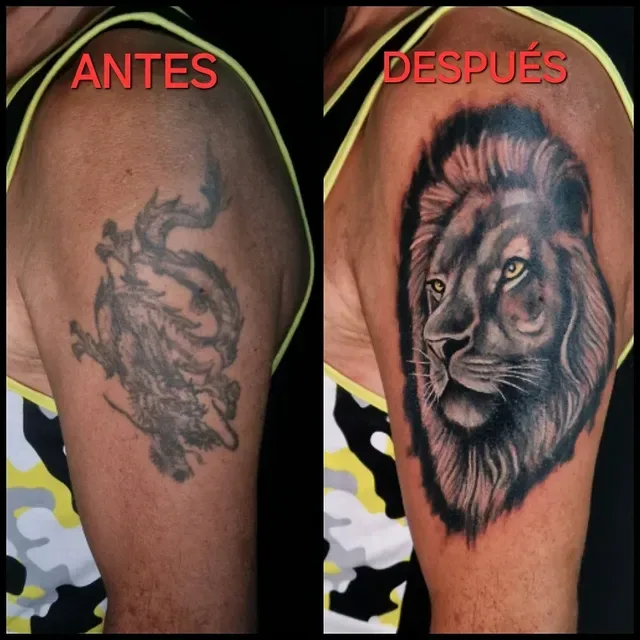
Light never covers dark. The new piece has to be darker and bigger than the old one — usually two or three times the surface. If somebody promises to hide a solid black tribal under a small, delicate design, they are selling you a story.
What we cover without drama
Thin lettering, names, stray lines, old faded work and small light-black pieces. Those take a shaded realism piece, dense blackwork or an ornamental design very well. A lion, a samurai or a floral sleeve hide a lot, because they carry dark mass exactly where it is needed.
What needs laser first
Solid black blocks, big nineties tribals, heavily saturated ink on hands, fingers or neck. Three to five laser sessions lighten it enough for the cover-up to be a real design instead of a patch. We do not do laser here, but we will tell you straight if you need it.
How the appointment works
Come by with the area uncovered — no appointment needed. We look at it, tell you what is realistic, and draw the proposal straight onto your skin with a marker before anything else happens. A mid-sized cover-up runs 350 to 600 euros across two or three sessions, three to four weeks apart.